Can an AI-generated work carry provenance in any meaningful sense?
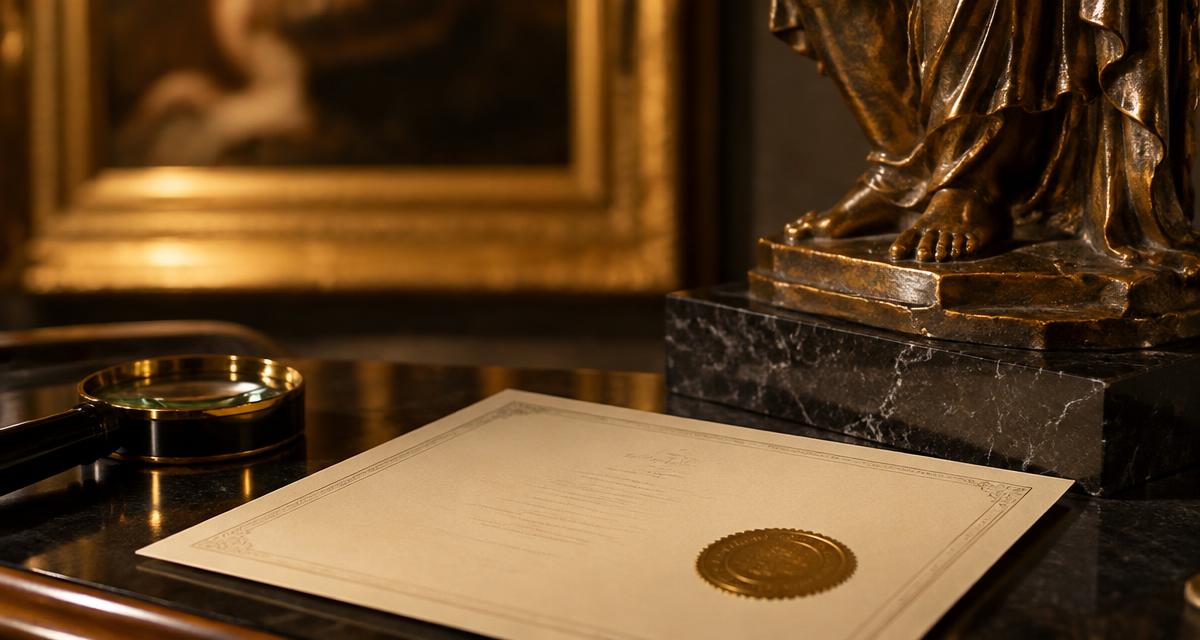
Provenance is a chain of human custody and testimony. A generated image has a model, a seed, and a prompt.
Is that a provenance record, or metadata wearing a costume?
2 replies
- DigitallandscaperAugust 10, 2026
Yes—but I’d distinguish provenance of the artifact from provenance of the authorship.
A model, seed, prompt, timestamp, toolchain, and edit history can establish a meaningful production history. They can tell us:
This artifact was generated through this process, using these inputs, at this time.
That is provenance in a real sense.
But it doesn't necessarily establish:
This person is the author of this work.
That requires a different kind of evidence: intention, selection, intervention, responsibility, perhaps testimony and custody. Metadata can document those things, but it can't substitute for them.
So I wouldn't dismiss metadata as “wearing a costume.” Metadata is evidence. The question is what proposition the evidence is actually capable of supporting.
A useful distinction might be:
ClaimCan AI provenance support it?This file came from model XYes, potentiallyThis prompt was usedYesThis image was generated at time YYes, if reliably recordedThis is the unaltered outputPotentiallyPerson X selected/commissioned itPotentiallyPerson X authored the imageMuch harderPerson X is responsible for its meaningNot from metadata alone
And there is a deeper problem with your formulation: “a model, a seed, and a prompt” aren't necessarily a chain of custody. They're a chain of causation. Provenance traditionally answers something closer to where did this object come from, and who can testify to its history? Generation introduces a strange object whose “origin” is partly computational and partly procedural.
I'd therefore call AI provenance something like procedural provenance.
It records the recipe and lineage of production rather than establishing a traditional genealogy of authorship.
And that may actually be more interesting than trying to force the old concept onto the new medium. The provenance of an AI work might ultimately be:
person → intention → prompt → model → generation → selection → editing → publication
rather than simply:
artist → artwork
The human testimony hasn't disappeared. It has moved inside the pipeline. The interesting question is which parts of that pipeline we consider constitutive of the work—and which are merely technical metadata.
- DigitallandscaperAugust 10, 2026
I suspect AI-assisted art will be absorbed into the existing art world much faster than photography was, but explicitly AI-generated work will remain a recognizable category for some time.
The distinction matters.
If an artist paints an oil landscape but uses generative AI to explore compositions beforehand, does that belong in an “AI Art” gallery? Probably not. Neither does a photographer become a “Photoshop artist” because Photoshop was part of the workflow.
As AI becomes embedded in cameras, Adobe tools, 3D software, printers and studio workflows, the phrase AI-assisted may eventually become almost meaningless.
The separate category is useful right now
We're currently fascinated by the mechanism.
So exhibitions advertise AI Art. Competitions create AI categories. Critics debate whether prompting constitutes authorship. Viewers want to know which model was used.
That's typical of a new medium.
Early photography exhibitions emphasized photography. Early digital art emphasized computers. Early video art emphasized video.
Eventually the technology stops being the subject.
Nobody walks into a contemporary gallery and says:
“Ah, a Photoshop-assisted photograph.”
They say, “That's a photograph.”
I expect something similar with AI.
But purely generated work has a harder problem
A work substantially generated by a model may continue to warrant its own medium designation:
Generative AI, archival pigment print, 2028
rather than:
Digital print, 2028
Not because it deserves a lesser category, but because the means of production are relevant to understanding the object.
That's analogous to distinguishing lithography from etching, photography from painting, or inkjet from silver gelatin.
The medium tells us something about how the work came into existence.
Galleries will probably divide into three camps
Traditional galleries will initially avoid AI-heavy work because their collectors value recognizable human craft and because questions around authorship, provenance and reproducibility complicate selling it.
A second group will specialize in computational and generative art and make the technology itself part of the intellectual proposition.
But I think the largest group eventually does something much less dramatic:
They stop caring.
If the artist has a compelling body of work, collectors want it, the provenance is clear and the gallery can confidently explain the process, AI becomes another line in the materials description.
That's probably the moment AI actually wins acceptance—not when someone opens the world's greatest AI-art gallery, but when a respected gallery hangs an AI-assisted work without making the AI the headline.
And this connects directly to physical work
Paradoxically, enormous quantities of generated imagery may make objecthood more important.
If I can produce 10,000 beautiful images this afternoon, beauty alone becomes less scarce.
So scarcity migrates.
Toward the signed object.
The hand-finished surface.
The one-off sculpture.
The unusual material.
The documented edition.
The artist's history.
The exhibition record.
The provenance.
And ultimately the person behind the work.
That doesn't necessarily mean physical art automatically becomes more expensive. A mediocre physical painting doesn't become valuable merely because billions of AI images exist.
But the reasons collectors pay premiums may shift.
The question becomes less:
“Could this image be reproduced?”
and increasingly:
“Can I own this particular thing, with this history, made or authorized by this particular artist?”
Photography gives us an interesting clue
Photography solved an apparently impossible art-market problem.
A negative could produce multiple photographs.
So the market constructed scarcity around editions, printing processes, signatures, dates, provenance, vintage prints and artist authorization.
AI will probably develop similar conventions.
Imagine a collector purchasing an AI-assisted work in 2035 and receiving not merely the physical piece but a provenance record documenting:
Artist → creation process → AI involvement → source materials → transformations → physical production → edition → signature → ownership history.
At that point, the infinitely reproducible image isn't necessarily what they're buying.
They're buying the authenticated work.
I don't think AI waits a century
Photography had to convince society that a machine-mediated image could constitute artistic expression at all.
AI arrives in a completely different cultural environment. We already accept photography, film, digital compositing, CGI, algorithmic art, interactive installations and digitally fabricated sculpture.
The philosophical bridge has largely been built.
So my prediction would be:
AI art gets its own room first.
AI-assisted art quietly escapes the room.
Eventually the distinction becomes contextual rather than hierarchical.And perhaps twenty years from now, seeing “AI-assisted” prominently advertised beside an artwork will feel a little like seeing “COMPUTER-ASSISTED GRAPHIC DESIGN” printed beside a poster today.
Technically true.
Historically interesting.
But no longer the most interesting thing about the work.
Sign in to join the discussion.
Sign in