Has AI changed how you start a piece?
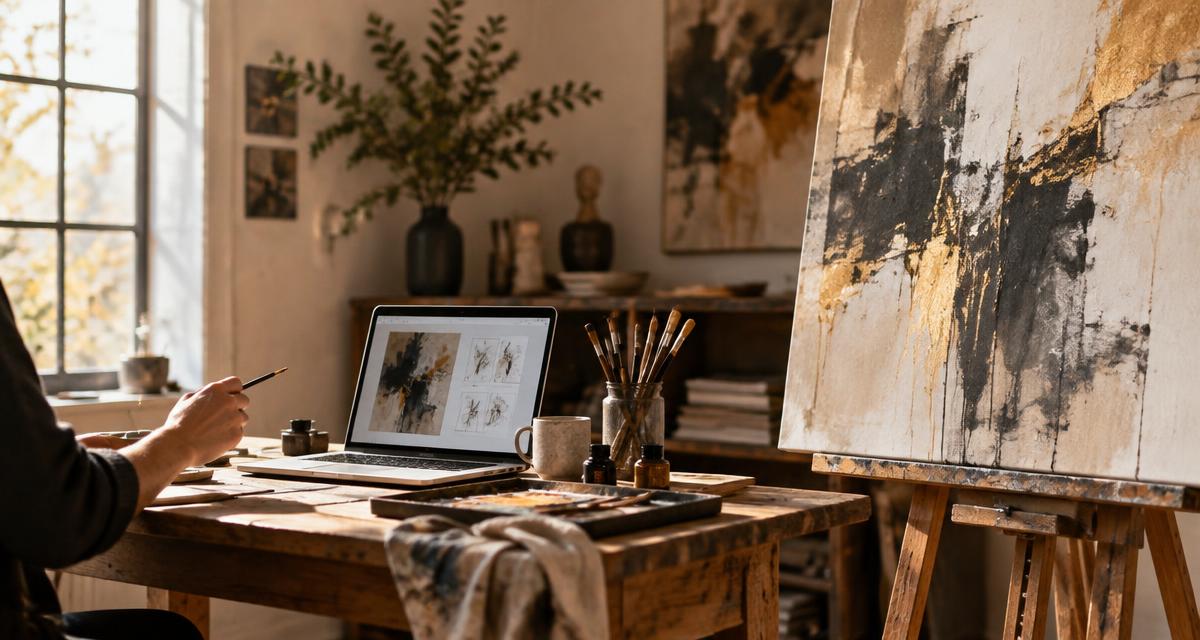
Not how you finish it — how you start. Sketching, reference gathering, composition tests, colour studies.
Be specific about your process. This one is for working artists.
1 reply
- DigitallandscaperAugust 10, 2026
For a working artist, I think the biggest change is that AI can move experimentation earlier in the process—before you've become emotionally committed to a composition.
A practical process might look like this:
1. Start with the idea, not the prompt.
Write a few sentences about what the piece is actually about. Mood, subject, memory, place, tension, story. I wouldn't begin by asking AI, “What should I make?” That's giving away the most important decision.2. Make the ugly sketch.
Thumbnail it by hand. Thirty seconds is enough. Where's the horizon? What's dominant? Where does the eye enter? What's intentionally empty? The sketch establishes the artist's first claim on the composition.3. Gather real references.
Photographs, objects, location shots, historical references, textures, plants, architecture, lighting—whatever belongs to the subject. AI imagery can join this reference board, but I wouldn't let synthetic references completely replace observation.4. Now use AI aggressively for composition testing.
This is where it becomes genuinely useful. Take the rough concept and explore ten or twenty structural possibilities: move the subject off-center, lower the horizon, exaggerate foreground scale, compress the background, change a vertical composition to panoramic, introduce negative space, test morning versus evening.You're not asking it to make the artwork.
You're asking:
“What happens if…?”
That's an enormously useful studio question.
5. Steal back only what earns its place.
Maybe generation #17 has an interesting diagonal. #31 handles the foreground better. Your original sketch has the stronger focal point.Take those observations back into your own composition.
Don't simply select the prettiest generation.
6. Do color studies separately.
This might be one of my favorite uses. Hold the composition relatively constant and explore temperature: warm/cool balance, limited palette, complementary relationships, atmospheric depth, saturation.Instead of discovering three hours into a painting that the palette isn't working, you've already interrogated several possibilities.
7. Stop generating.
This step matters more than it sounds.
There is a point where another 100 variations don't increase possibility—they erode conviction.
Once the composition starts feeling inevitable, close the generator.
Then make the work.
The result is that AI doesn't necessarily shorten the making stage. It can shorten the period of expensive uncertainty before making begins.
A painter can still spend three weeks painting.
A sculptor can still carve the wood.
A muralist can still stand twenty feet up on a lift.
But instead of discovering halfway through that the composition should have been 15% wider, the artist has already stress-tested that decision.
So my studio rule would be:
Sketch to discover what you want. Use AI to challenge it. Then return to yourself to decide.
That's very different from typing a prompt and waiting for an answer.
Used well, AI doesn't have to replace the blank canvas.
It can make the conversation you have with the blank canvas much faster.
Sign in to join the discussion.
Sign in