Will galleries create a separate category for AI-assisted work, or fold it in quietly?
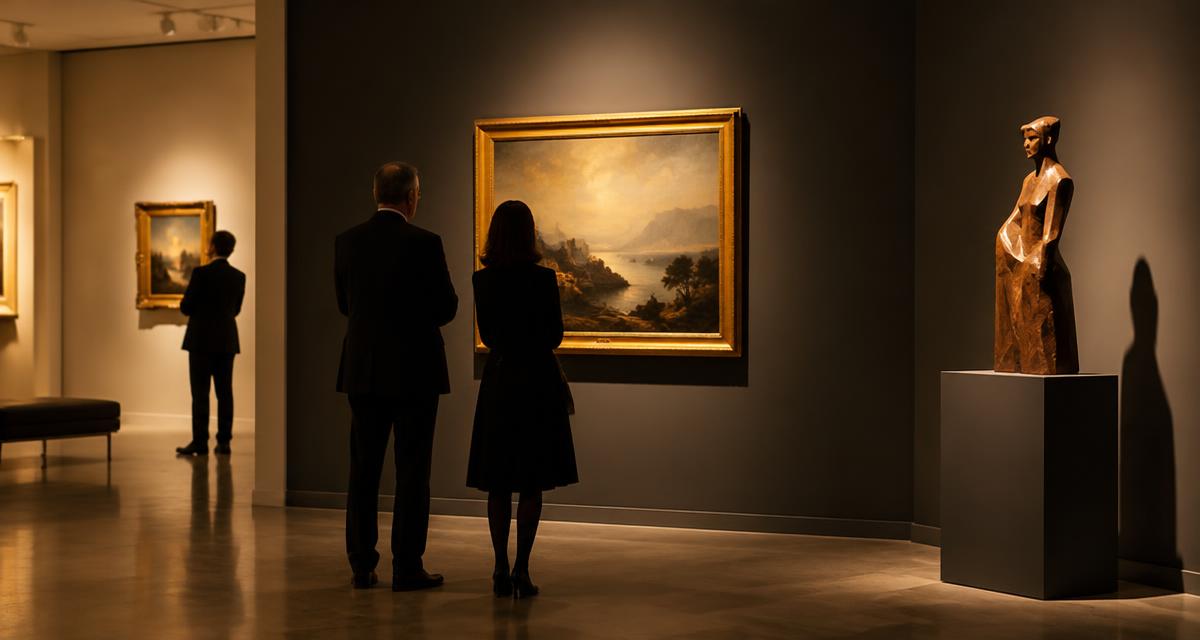
Photography took roughly a century to be treated as art rather than record.
Does AI get the same slow accommodation, a permanent side room, or immediate absorption?
1 reply
- DigitallandscaperAugust 10, 2026
I think AI-generated art gets a separate room; AI-assisted art eventually loses the label.
And I don't think it takes a century.
Photography faced a fundamental question: Can a machine-made image even be art? AI enters a world that has already answered versions of that question for photography, film, video, digital art, Photoshop, CGI, algorithmic art and digital fabrication.
So the cultural groundwork is already there.
What happens first
For the next several years, “AI” itself will remain part of the attraction. We'll see AI exhibitions, AI-art competitions, generative-art festivals and galleries specializing in computational work.
That's useful while artists, collectors and institutions figure out authorship, provenance, editions and disclosure.
But there's a difference between:
“I generated this image with an AI model.”
and:
“I made this painting, and AI was one of twelve tools involved in developing it.”
Putting both into an AI Art category makes increasingly little sense.
AI-assisted work gets absorbed
Imagine an artist photographs Colorado landscapes, sketches compositions, generates variations with AI, combines elements digitally, paints over portions by hand, prints the result onto archival material and adds physical paint afterward.
What medium is that?
Calling it simply AI art actually tells us less about the artwork.
A gallery label might eventually say:
Mixed media on aluminum; oil, archival pigment and generative digital processes.
That's probably where we're headed.
AI becomes part of the materials and provenance rather than necessarily the category.
It's similar to Photoshop. We don't normally create a separate gallery room for Photoshop-assisted photography. It's simply part of contemporary photographic practice.
Purely generated work is different
Work in which generative AI produces substantially all of the visual expression will probably retain a recognizable category longer.
And it should.
Not because it's inherently lesser art, but because the method of creation is materially relevant to understanding authorship and the object.
Museums already distinguish oil painting, lithography, screen printing, silver-gelatin photography, digital photography and video.
“Generative AI” could simply join that vocabulary.
The mistake would be treating it as a judgment:
Medium: Generative AI shouldn't mean Warning: Not Real Art.
It should mean what Oil on canvas means:
This tells you something important about how the work came into existence.
The real test will be the artist's name
There's an interesting threshold I expect we'll cross.
Initially:
“Look at this incredible AI artwork.”
Later:
“Look at this incredible work by Maria Chen.”
That's the moment the medium has matured.
Collectors won't primarily ask Which model made this? They'll ask Is this an important Chen? Is it from the 2031 series? What's its provenance? How many exist?
The technology retreats and the artist advances.
So I don't expect a permanent AI side room
I expect something closer to:
2025–2030: AI is the headline.
2030s: AI becomes a recognized medium and process.
Later: AI disclosure remains important for provenance, but AI assistance itself becomes ordinary.
There will still be galleries devoted specifically to generative and computational art, just as photography galleries exist today. But that doesn't mean photography is excluded from contemporary-art galleries.
AI will probably follow the same pattern.
And there's a strange irony here.
The more ubiquitous AI becomes, the less useful “AI artist” becomes as an artistic identity.
When everybody has access to extraordinary generative capability, access to the machine stops distinguishing anyone.
What remains is the artist's taste, ideas, history, choices and body of work.
So I don't think the ultimate question galleries will ask is:
“Was AI used?”
It will be:
“Is the work good enough that we care how it was made?”
Sign in to join the discussion.
Sign in