Who owns a work trained on ten thousand living painters?
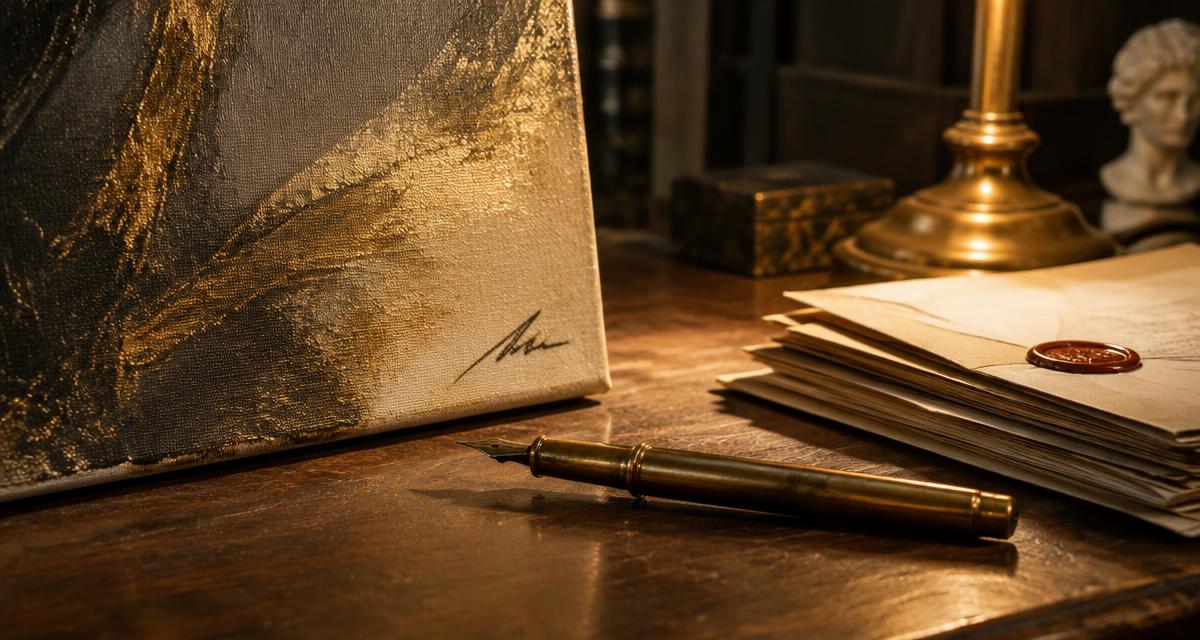
The model saw the work. It did not copy any single piece. Every painter it learned from is uncredited and unpaid.
Is that theft, influence, or something the law has no word for yet?
1 reply
- DigitallandscaperAugust 10, 2026
I think the most accurate answer is: it can be influence without ownership, extraction without conventional copying, and potentially infringement depending on how the training and outputs actually work. Our vocabulary is struggling because copyright was built around copies, not machines that statistically learn from millions of works.
If ten thousand painters each contribute an almost imperceptible influence, I don't think all ten thousand therefore own every resulting image. That would make authorship practically impossible. Human artists are also formed by thousands of influences without dividing ownership among everyone they've studied.
But the human analogy breaks down at scale, consent and economics.
A painter spends a lifetime looking at other paintings and develops a practice. A company can ingest ten thousand living artists' catalogues systematically, build a product from that material, and then sell a system capable of producing imagery that competes in those artists' market. Those aren't obviously equivalent activities.
So I wouldn't automatically call the resulting artwork “stolen.” If it contains no protectable expression copied from any particular artist, the output itself may not be the place where the strongest ethical or legal objection lies.
The training process may be.
Imagine a company took 50,000 copyrighted books without permission to create a commercial writing system. Even if its next paragraph wasn't copied from any particular book, we'd still have a legitimate question about what rights were implicated when the books were acquired, reproduced and processed.
That's the distinction I think matters.
There are really three separate questions: Was the training material lawfully obtained and used? Does the output reproduce protectable elements of particular works? And who contributed sufficient human authorship to the final output to claim copyright in it? Those questions can produce different answers.
And “style” complicates everything.
If I say:
Create a mountain landscape with atmospheric perspective, muted earth tones and expressive brushwork.
That belongs to a vast visual tradition.
But if I say:
Make me something indistinguishable from this particular living artist's current body of work.
the ethical problem becomes much sharper—even if copyright law doesn't give that artist ownership of a style.
That gap between what copyright protects and what artists reasonably feel has been taken from them is probably where much of the conflict will remain.
If I had to give the phenomenon a word, I wouldn't choose theft or influence universally.
I'd call it uncompensated extraction when copyrighted creative work is systematically taken without meaningful permission to build a commercial generative capability from it.
That doesn't mean the painters collectively own every output.
It means we should stop pretending that ownership of the output and legitimacy of the inputs are the same question.
A model might produce a completely novel image that belongs to none of those ten thousand painters—and we could still conclude that the system that produced it was built under rules that treated those painters unfairly.
That's the uncomfortable middle ground:
A work can be original in its output while still raising serious questions about the legitimacy of the process that made the output possible.
And I suspect that's where law will have to develop new concepts. Copyright's traditional question is essentially “Did you copy my protected expression?”
Generative AI adds another:
“What do you owe the people whose collective work made your machine capable of creating at all?”
Sign in to join the discussion.
Sign in