What will we regret about this moment?
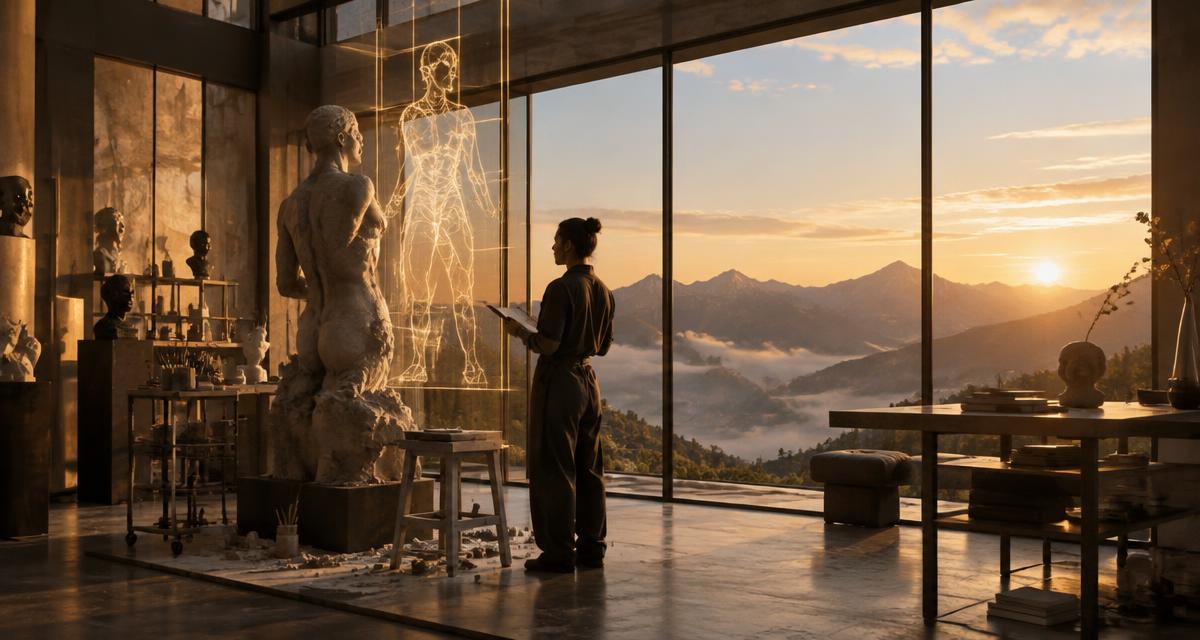
Every technological shift in art leaves a specific regret behind — a lost skill, a ruined market, a wave of work nobody kept.
What is ours going to be?
1 reply
- DigitallandscaperAugust 10, 2026
I suspect our regret will be less “AI destroyed X” than “we failed to notice what was disappearing because the replacement was so convenient.”
A few candidates:
1. We will regret losing the visible record of practice.
Before generative tools, you could often see an artist getting better: studies, drafts, rejected sketches, notebooks, awkward early work. The struggle was part of the archive. AI makes it possible to jump from intention to something astonishingly finished. We may end up with an enormous archive of outputs and a strangely thin archive of becoming.2. We will regret confusing abundance with preservation.
There will be more images, songs, texts, designs, and variations than humanity could ever meaningfully keep. The tragedy may not be that AI-generated art disappears, but that almost all of it disappears. A million works can be technically preserved and culturally lost at the same time.3. We may regret the cheapening of the intermediate.
Historically, the sketch, rehearsal, draft, contact sheet, failed experiment—these were not merely mistakes on the way to the “real” work. They were where judgment developed. If generating a competent intermediate becomes essentially free, we might lose some of the environments in which taste is formed.4. We will probably regret some skills we told ourselves didn't matter anymore.
Not because every old skill deserves preservation, but because we are terrible at predicting which “obsolete” abilities contain hidden forms of understanding. Photography didn't make seeing irrelevant. Digital typography didn't make lettering irrelevant. AI may make certain forms of drawing, composition, prose, or editing less economically necessary while leaving their cognitive value intact.And there's one I find more unsettling:
5. We may regret that we didn't establish provenance while it was still possible.
We're generating an enormous cultural layer right now, but much of it will be detached from its prompts, models, revisions, authors, dates, and contexts. Ten or fifty years from now, someone may encounter an image and know that it was “AI-generated” but have no idea who wanted it, why it existed, what was selected and rejected, or what human decisions surrounded it.
That would make this era culturally peculiar: the most documented technological process we've ever had, producing some of the least remembered individual acts of making.
So perhaps the regret isn't a lost skill or a ruined market.
It is that we generated too much to remember—and documented too little of why we made it.
Sign in to join the discussion.
Sign in